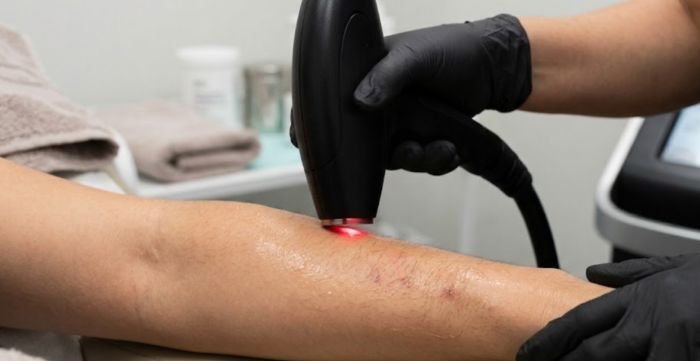
Most people who look into laser hair removal or tattoo removal focus on the outcome. Smoother skin. Faded ink. What tends to get skipped is the part in between, the actual biology happening beneath the surface that makes those results possible. Understanding that process changes how people approach treatment planning, aftercare, and even how many sessions they expect to need.
How Laser Hair Removal Actually Works on the Follicle
Laser hair removal targets pigment, not hair itself. The device sends light energy that gets absorbed by melanin inside the follicle, and that absorbed energy converts to heat, which damages the follicle’s ability to produce new hair. This is why hair color and skin tone both matter so much in treatment planning. A follicle with strong pigment responds differently than one that’s finer or lighter.
Because hair doesn’t all grow on the same schedule, a single session only catches follicles that happen to be active at that moment. That’s the reason treatments are spaced weeks apart rather than done all at once. Over several sessions, more follicles get caught during their active phase, which is what produces the gradual thinning most people associate with laser hair removal.
What Tattoo Ink Looks Like to a Laser
Tattoo removal works on a similar principle but with a different target. Laser energy breaks tattoo pigment into smaller fragments small enough for the body’s immune system to clear away naturally. Darker, denser inks often respond differently than lighter or multicolored ones, which is why some tattoos fade faster than others even under the same equipment.
Skin needs time to recover between sessions, both to let inflammation settle and to give the body a chance to process the broken-down pigment. Rushing this timeline doesn’t speed up results and can actually work against the skin’s ability to heal cleanly.
Why Skin Type and Session Spacing Matter
A few factors tend to influence how any laser treatment performs:
- Natural skin tone and how it interacts with laser wavelengths
- Hair thickness or ink density and depth
- How consistently sessions are spaced out
- Aftercare habits like sun exposure and moisturizing
None of these factors work in isolation. A treatment plan built around a person’s actual skin and hair characteristics tends to hold up better over time than a generic, one-size-fits-all approach.
Consultations Change the Outcome
An in-person evaluation before treatment begins allows a provider to assess skin type, hair texture, or tattoo depth and color before settings are chosen. This step is often what separates predictable, controlled results from inconsistent ones. Clinics offering laser hair and tattoo removal, including providers that also offer treatments like a Carbon Laser Facial in Belleville, often build their process around this kind of assessment first.
Laser treatments aren’t instant, and they were never meant to be. They rely on the body’s own healing process working alongside precise, targeted technology, which is precisely why patience and proper spacing between sessions matter as much as the equipment itself.