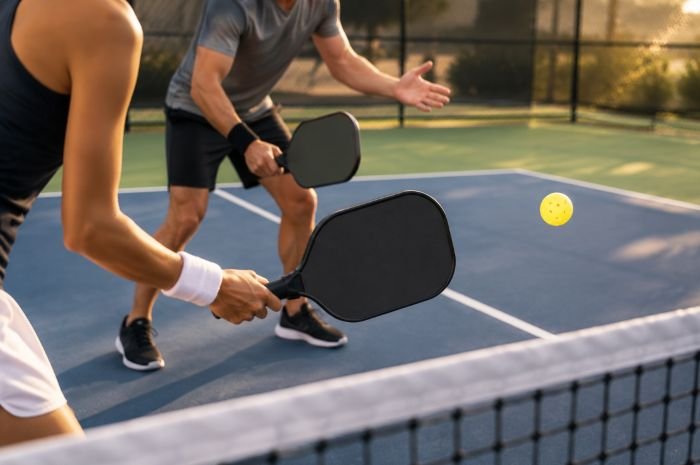
Pickleball does not take long to get into. A few minutes on the court and most people are already rallying, laughing, and planning their next session. But somewhere between that first game and the desire to actually compete, a gap opens up. That gap is where real development begins.
The Sport Has Layers Most Casual Players Never Reach
On the surface, pickleball looks simple. The court is compact, the scoring is manageable, and anyone can get a rally going within the first hour. But the players who stick with it long enough start noticing something: there is a deeper game underneath all of that.
Kitchen line discipline, third-shot construction, reset mechanics, and serve consistency are not things that come naturally through casual play. They are skills that get built deliberately, usually with someone experienced pointing out what is going wrong and why.
Bad Habits Form Faster Than Good Ones
One of the most overlooked challenges in pickleball is how quickly poor technique becomes muscle memory. A grip that feels comfortable in week one might be the exact reason a player stalls at an intermediate level a year later. Footwork that passes in a social game starts breaking down as soon as the rally pace increases.
This is the quiet cost of skipping structured instruction. The time spent practicing the wrong way does not just delay progress; it creates patterns that take twice as long to correct later on.
What Deliberate Coaching Actually Changes
Working with a qualified instructor shifts the entire learning curve. Rather than guessing at adjustments, players get direct feedback grounded in technique and game understanding. Sessions typically build across several areas:
- Paddle angle and grip pressure from the very first lesson
- Soft game fundamentals at the kitchen line
- Serve mechanics built for consistency under pressure
- Movement patterns and court coverage
- Point construction based on the player’s current level
The difference in progression between coached players and self-taught ones becomes obvious within just a few months on the court.
Community, Coaches, and the Right Connection
Beyond individual improvement, there is something meaningful about being connected to the broader pickleball community. Finding the right coach is not just about skill transfer. It is about finding someone whose teaching style matches how a player actually learns, whether that person is brand new to the sport or chasing a competitive edge at an advanced level.
For players ready to take that step, the Pickleball Instructor Directory offers a straightforward way to find qualified local instructors, filter by location and teaching focus, and make a connection that genuinely moves the game forward.
The paddle does not lie. Neither does a great coach.