Most families plan around the school calendar without examining it. Ten months of instruction, two months off, repeat. For older students that rhythm is survivable. For a five year old who has just started decoding words, ten weeks away from print can undo a season of progress.
Teachers see it every September. Children who left in June reading with some fluency return hesitant, sounding out words they had already mastered. The first six weeks of the new year get spent recovering ground instead of covering new material. Then it happens again the following summer.
Early Reading Skills Are Fragile Until They Are Automatic
There is a difference between a child who can read a word and a child who no longer has to think about it. Automaticity takes repetition, and repetition takes time that does not pause for a season.
This matters more in the preschool and kindergarten years than at any point after. A ten year old who reads independently will keep reading over the summer without being asked. A four year old will not. The skill has not become a habit yet, and habits are what carry a child through a gap.
The result compounds. Small losses each summer stack into a real deficit by second grade, which is exactly the point where the research turns unforgiving. Children who are not reading well by then face a sharply higher chance of struggling long term.
Year Round Progression Changes the Math
Continuous instruction is less about intensity and more about not restarting. A step by step sequence that runs through the calendar keeps a child moving forward in small increments, which is easier on the child than a September scramble.
Programs built this way tend to share a few traits:
- Defined levels rather than a vague grade label
- Instruction that continues through summer at a lighter pace
- Phonics, phonemic awareness, fluency, vocabulary, and comprehension taught in order
- Pacing set by the child, not the calendar
An Early Education Program for Children that follows this structure tends to produce steadier results than a stop and start school calendar, because a child is never asked to rebuild fluency they already had. Small, consistent steps through the year add up to real ground gained, and that ground is often the difference between a child who walks into first grade reading and one who is still assembling the parts. The pace feels gentle to the child even as the progress compounds.
The Format Has to Be Something a Child Will Return To
Year round only works if the child does not resist it. Ten months of instruction plus two months of drills is a fast way to teach a four year old that reading is a chore.
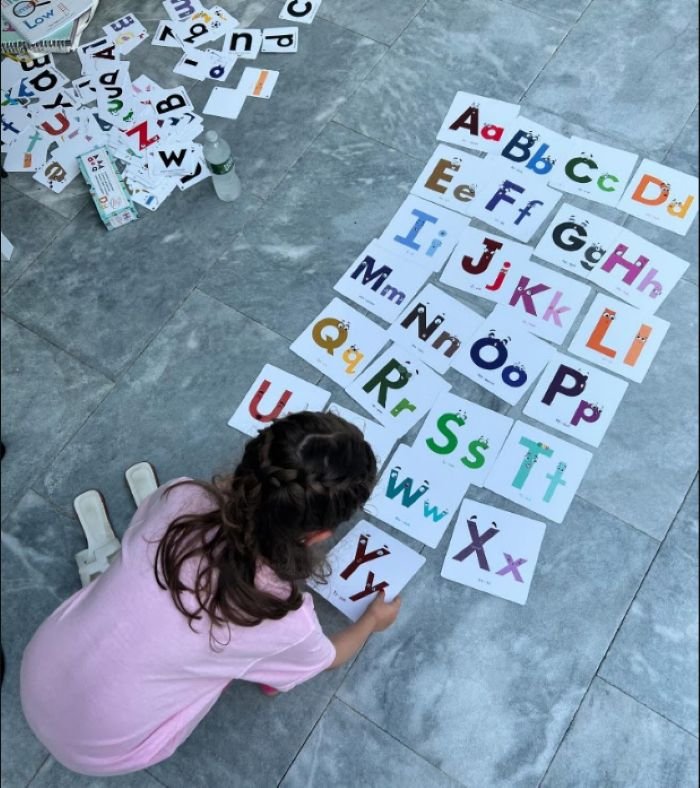
Play based instruction solves the compliance problem. Age appropriate games hold attention long enough for repetition to do its work, and the child does not experience it as school in July. Methods designed around this idea, including the Alexander Reading Method, treat play as the mechanism rather than the reward that follows the real lesson.
What It Buys Later
A child who never lost ground arrives at first grade reading, not catching up. That child spends the year learning rather than recovering, and the comparison to classmates that starts around age six lands very differently.
The summer gap is one of the few disadvantages in early education that is entirely optional.