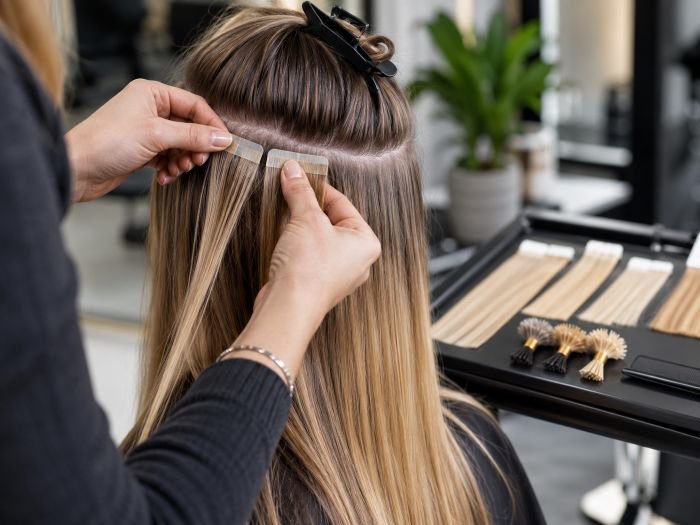
Two people can buy identical hair and get completely different results from it. One walks out with movement and blend, the other spends three months fighting slippage and tension at the temples. The hair was never the variable. The attachment method was, and it is the part of the decision that gets the least research.
Fine Hair Punishes Weight
Attachment choice comes down to how much weight the natural hair can carry at the root. Fine or chemically lightened hair tends to do better with tape wefts, which spread load across a flat surface instead of concentrating it on a small bond. Thicker, coarser hair handles keratin tip or i tip installs comfortably, and a sew in weave suits dense hair that can hide a braided track without strain. Trend has very little to do with it, though social media suggests otherwise.
Worth confirming with a stylist before committing:
- How many grams the natural hair can support without visible tension
- Whether the maintenance interval fits an actual schedule, since tape usually moves every six to eight weeks
- Whether the hair colour will be lifted later, because bonds and lightener rarely cooperate
Grade Matters More in Semi Permanent Sets
A clip in set that comes out every night forgives a lot. A semi permanent install does not, because the same hair gets washed, brushed, and heated continuously for months. This is why Virgin hair is generally reserved for tapes, weaves, keratin tips, and i tips, where cuticle integrity has to survive months of real wear. Listings for Wholesale Hair Extensions often state the grade separately for each method for that reason, and the distinction is worth reading rather than skimming.
Heat Is the Faster Way to Ruin a Set
Human hair extensions have no blood supply and no way to repair heat damage, so every pass with an iron is permanent. Most sets sit comfortably between 300 and 375 degrees, well under the maximum on modern tools. Plates and barrels made from titanium or tourmaline hold that temperature steadily instead of spiking, which is the difference between a smooth pass and a scorched section. Digital displays help here in a plain way: a number on a screen is easier to respect than a dial with three vague settings.
Small Habits, Longer Life
Most sets that fail early fail for unremarkable reasons. Sleeping with damp extensions, brushing from the root down instead of the ends up, and using conditioner directly on tape bonds all shorten lifespan faster than styling ever will. Loose braiding overnight and a wide tooth brush cost nothing and buy weeks.
The choice worth making carefully is the first one. Match the method to the hair that has to hold it, verify the grade for that method, then keep the heat modest. A good set installed badly still looks bad, and no product on a shelf corrects that afterwards.