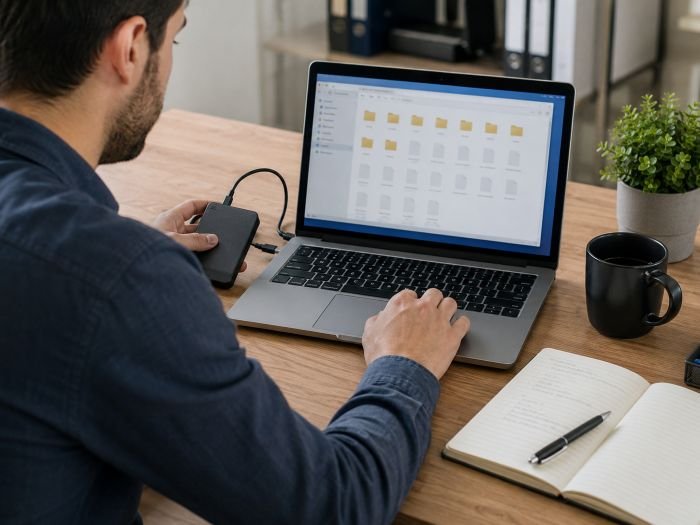
A laptop returned to a company on a Friday afternoon looks unremarkable. The desktop is tidy, the recycle bin is empty, the browser history is gone. To the person handing it back, the account is closed. To a forensic examiner, the story has barely started.
Deletion, in most operating systems, is a bookkeeping change rather than an erasure. The file itself stays where it was until something else needs the space. Timestamps, registry entries, shadow copies, journal records, and thumbnail caches keep their own separate ledgers, and those ledgers rarely get cleaned at the same time. The gap between what a user believes happened and what the machine recorded is where most cases are decided.
The Evidence Sits in the Margins
Investigators usually spend less time on documents themselves and more on the metadata surrounding them. A spreadsheet proves little on its own. The same spreadsheet paired with a USB connection log, a link file pointing to a drive letter that no longer exists, and a jump list showing the document opened eleven minutes before a resignation email becomes something else entirely.
Computer forensics work tends to concentrate on artifacts that were never meant to be read by people:
- Volume shadow copies preserving earlier versions of edited files
- Prefetch and shimcache records showing programs that ran and vanished
- Unallocated space holding fragments of chat sessions and drafts
- Cloud sync logs that quietly duplicated data offsite
None of these are hidden. They simply require someone who knows the file system well enough to ask.
Collection Decides Everything That Follows
The most common failure in a digital matter happens in the first hour, before an examiner is involved. Someone boots the computer to check something. Someone copies files with drag and drop. Someone runs an antivirus. Each action writes to the disk and overwrites the very space where deleted material might have survived.
Forensically sound acquisition means creating a verified bit for bit image using a write blocker, documenting hash values before and after, and maintaining a chain of custody that can withstand cross examination. Firms offering Digital Forensics Services generally insist on imaging first and analysis second, because a copy made incorrectly cannot be repaired later. The evidence either survives that first hour or it does not.
Testimony Is the Real Deliverable
A technically flawless examination that cannot be explained to a jury has limited value. Reports need to translate hex offsets and artifact parsing into a sequence of events an ordinary person can follow, and the examiner needs to defend each conclusion under questioning from opposing counsel.
That combination is uncommon. Practitioners with investigative backgrounds, including former federal agents and examiners with legal training, tend to structure their work around the questions a court will actually ask rather than around everything the software can produce. Groups such as Digital Evidence Ventures built their practice on that pairing of technical examination and courtroom experience, working alongside counsel from the first collection through sworn testimony.
Machines keep records without opinion or motive. The work is reading them correctly, and proving the reading holds.