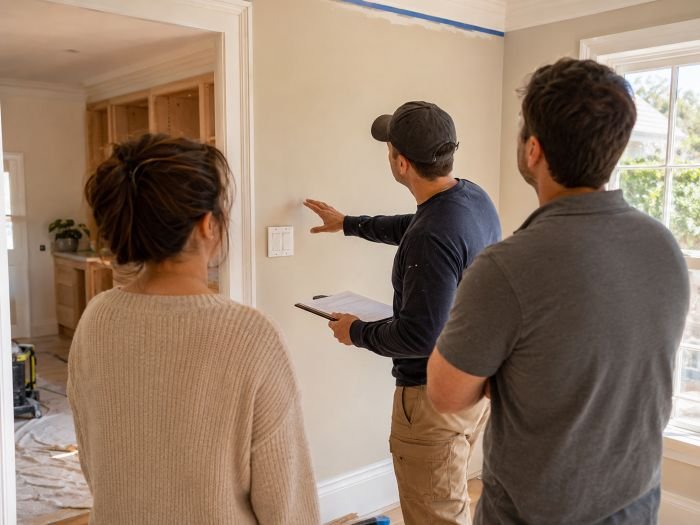
Contractors have a name for the final walkthrough items: the punch list. Loose trim, a switch plate that sits crooked, paint that stopped an inch short of the ceiling line. Homeowners tend to treat it as an inevitable tax on any project, the small stuff that always gets missed.
It is not inevitable. Almost every item on a typical punch list traces back to a decision made weeks earlier, usually at a point when nobody thought a decision was being made at all.
Small Details Are Downstream of Scope
A crooked switch plate is rarely careless. More often it means the electrical work happened before the drywall was properly floated, because the drywall subcontractor was booked and the electrician had a window. That tradeoff got made quietly, on a Tuesday, without the homeowner hearing about it.
The pattern repeats across categories. Baseboard gaps come from flooring installed after trim. Paint lines come from touchups scheduled around furniture that never got moved out. Each one is a scoping question that went unasked.
What Gets Left Out of Bids
Comparing quotes on price alone hides the parts that create punch lists later. The items most often missing from a written scope:
- Who moves and stores furniture during the work
- Where debris goes each day, not just at the end
- Which finish surfaces are protected and by whom
None of these are expensive. All of them cost real money when they surface mid-project as change orders or as rework nobody budgeted for.
Companies working across North County San Diego, Elevate Home Logistics among them, tend to write these into scope precisely because they are cheap to plan and expensive to fix.
The Same Logic Applies to Small Jobs
There is a tendency to assume this discipline only matters on a full remodel. A homeowner hanging a TV mount or installing garage shelving thinks of it as a one-hour task with no dependencies.
Then the mount goes into drywall without a stud, or the shelving brackets land where the garage door track swings. The job gets done twice. Furniture assembly, light fixture replacement, and mirror hanging all carry the same failure mode: they look independent and are not.
A homeowner evaluating a General Contractor in San Diego for a large project and a handyman for a small one is really asking the same question in both cases. Does this person think one step ahead, or only about the step in front of them?
Reading a Scope Document
The most useful thing a homeowner can do before work begins is read the written scope looking for verbs rather than nouns. Nouns describe what will exist at the end. Verbs describe who does what, in what order.
A scope that lists materials and finishes but never says who hauls the old vanity away has already generated its first punch list item. The document is the plan. If the plan is vague, the walkthrough will be long.