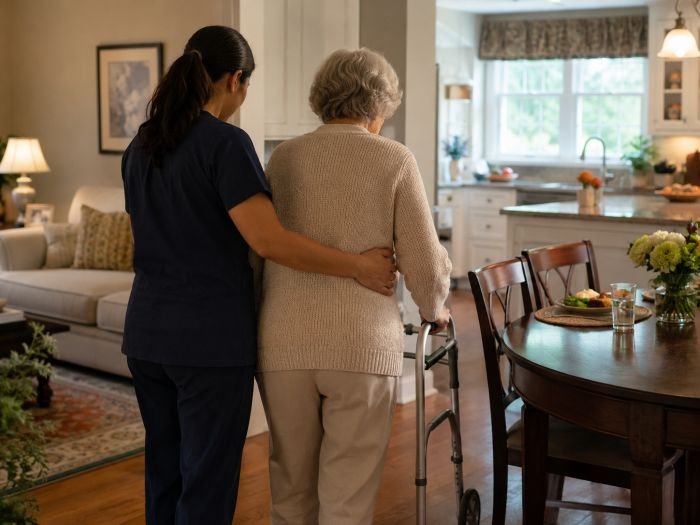
Aging in place has become one of the most common preferences among older adults across Guilford County and the wider Greensboro area. Most seniors would rather recover, rest, and grow older inside a familiar home than move into a facility. That preference has created steady demand for care that arrives at the door rather than requiring a relocation. Understanding what this kind of support involves helps families make calmer, better decisions during stressful stretches.
The Support That Fills Everyday Gaps
In-home elder caregiving usually starts with the small routines that become harder over time. A caregiver might assist with bathing, grooming, dressing, and mobility, always with an emphasis on dignity and patience. Others focus on companionship, meal preparation, light housekeeping, and simple conversation that keeps a person engaged throughout the day.
Common forms of daily assistance include:
- Personal care such as toileting, grooming, and safe movement around the house
- Meal planning and preparation suited to dietary needs
- Transportation to appointments, pharmacies, and grocery stores
These services allow seniors to keep their independence while reducing the load on relatives who cannot be present every hour.
The Days Right After a Hospital Stay
The period immediately following a hospital discharge carries real risk. The first 72 hours often determine whether a recovery goes smoothly or ends in a return trip to the emergency room. Medication errors, missed follow-up steps, and falls tend to cluster in this short window.
Trained caregivers can step in the same day someone comes home from Moses Cone Hospital, Wesley Long, or another local facility. Their presence helps a family track medications, watch for warning signs, and keep the household orderly while the patient regains strength. Families comparing In-Home Senior Care Services in Greensboro, NC will often find that this hospital-to-home transition is the difference between steady healing and a preventable setback.
Relief for the Family Members Doing the Work
Family caregivers carry an enormous responsibility, and burnout is common. Respite care offers scheduled breaks so relatives can run errands, travel, or simply rest without leaving a loved one unattended. Support can range from a few hours each week to full 24-hour coverage, adjusting as needs change.
Consistency matters here. Households tend to do best when the same caregivers return regularly, learning routines and becoming trusted faces instead of a rotating group of strangers. This continuity builds comfort for the senior and confidence for the family.
Choosing Local, Reliable Care
Proximity and responsiveness are practical concerns. A local team that offers around-the-clock, on-call support can react quickly to a fall, a sudden hospitalization, or any urgent change. RN supervision adds a layer of clinical oversight that many families find reassuring.
Memory care for Alzheimer’s and dementia, companionship, and post-discharge support are often offered together, which simplifies planning during difficult seasons.
Choosing care at home is rarely a single decision. It is a series of adjustments made over months, and reliable local support makes each one easier.