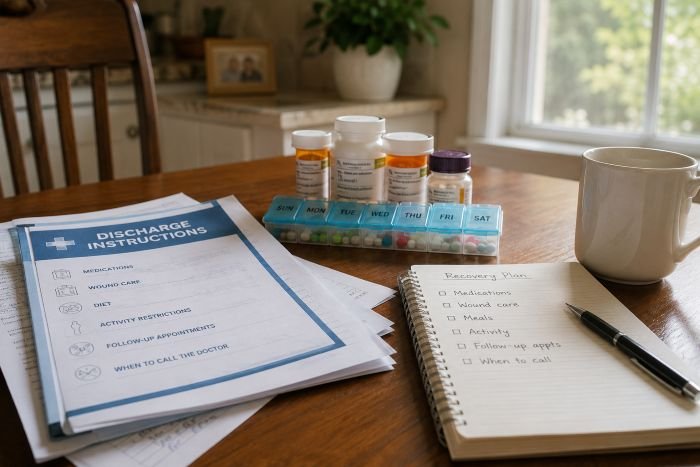
An older adult leaving the hospital is usually handed a folder. Inside sit medication lists, wound care steps, dietary limits, activity restrictions, and follow-up dates, all printed in clinical shorthand. The folder assumes the reader has medical training. In most homes, the reader is a daughter, a son, or a spouse who has never changed a dressing or counted a pulse. That mismatch between what the paperwork expects and what the family knows explains a large share of the setbacks that happen in the first month after a hospital stay.
The Instructions Gap
Studies of hospital transitions show that a majority of discharged patients or their caregivers misunderstand at least one core instruction, most often around medications. New prescriptions get layered on top of old ones. Doses change without the old bottles leaving the cabinet. A drug meant to be taken with food gets taken on an empty stomach because nobody flagged the difference. None of this reflects carelessness. It reflects a system that compresses days of clinical decision-making into a fifteen-minute bedside briefing on the busiest morning of the stay.
A Plan That Starts Before the Elevator Ride
Formal discharge planning services for post-hospital care exist to translate that folder into a working routine. The process usually begins while the patient is still admitted and produces a plan a family can actually run:
- A single reconciled medication schedule, with the discontinued drugs removed from the house
- Follow-up appointments booked, with rides sorted before the first one arrives
- Clear thresholds for action, such as the exact temperature or symptom that warrants a call
The value is not in the checklist itself. It is in having a person accountable for the checklist, someone whose job continues after the hospital’s job ends.
What In-Home Support Adds
Recovery generates questions at inconvenient hours, and it generates changes too subtle for a weekly doctor visit to catch. A trained in-home caregiver sees the senior daily, which turns them into an early warning system. Faint ankle swelling, a shuffle in the walk that was not there on Monday, a lunch left half eaten for the third day running: these observations, reported promptly, routinely convert a would-be emergency into a routine medication adjustment. Many providers now supplement that human attention with simple monitoring tools that track patterns across weeks, giving physicians data no single appointment could supply.
The Cost of Waiting
Families often postpone arranging help until after a fall or a second hospitalization proves the need. The math argues for the opposite order. A readmission costs thousands of dollars, disrupts recovery, and frequently accelerates the loss of independence that everyone was trying to prevent. A few weeks of structured support at home costs a fraction of that and preserves the routines seniors recover best inside. The discharge folder will always be written for clinicians. The plan wrapped around it should be written for the people who will actually live it.